Mass Deportation
Mixed media
Fabric, Paper, Paint
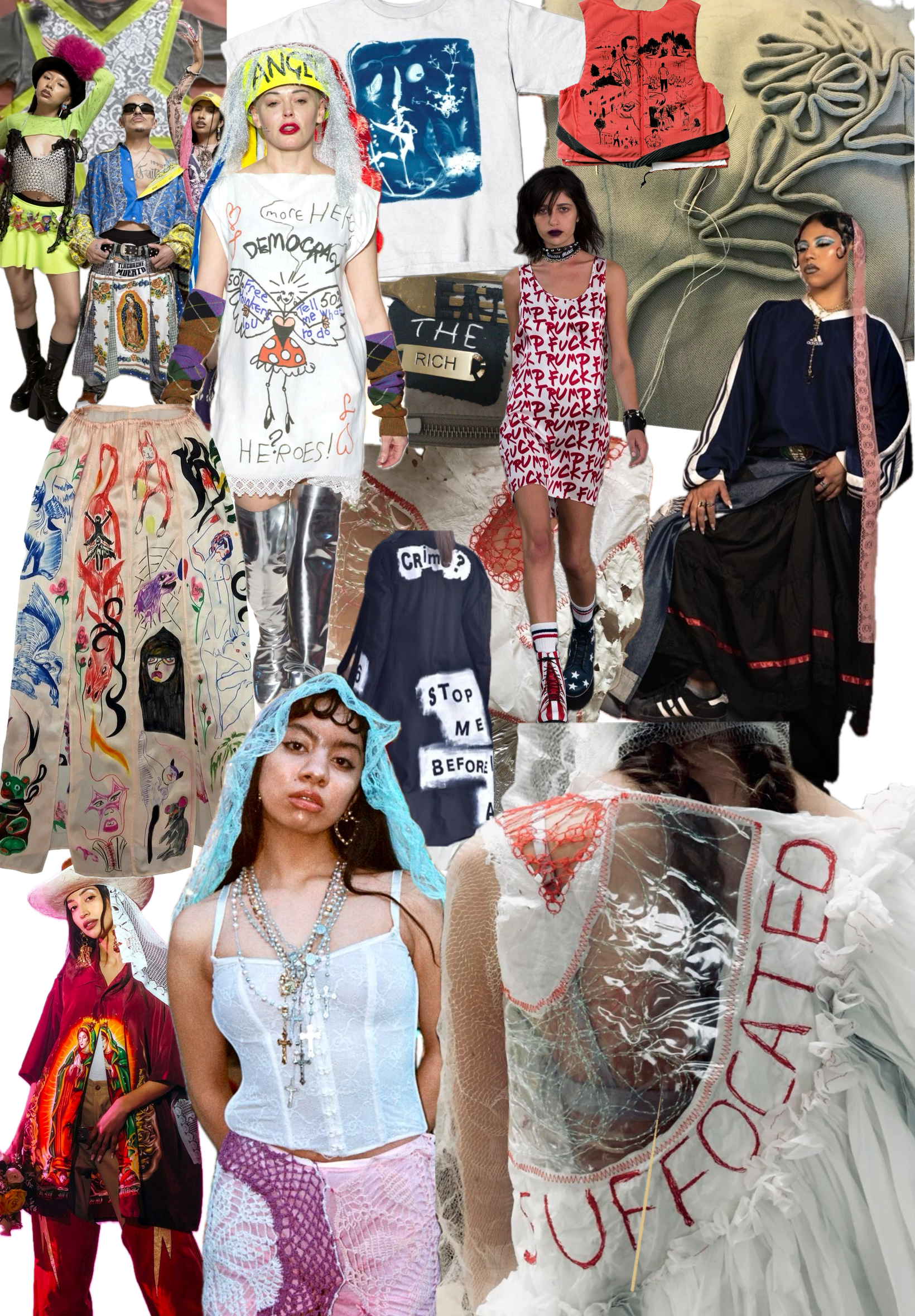
Mood Board
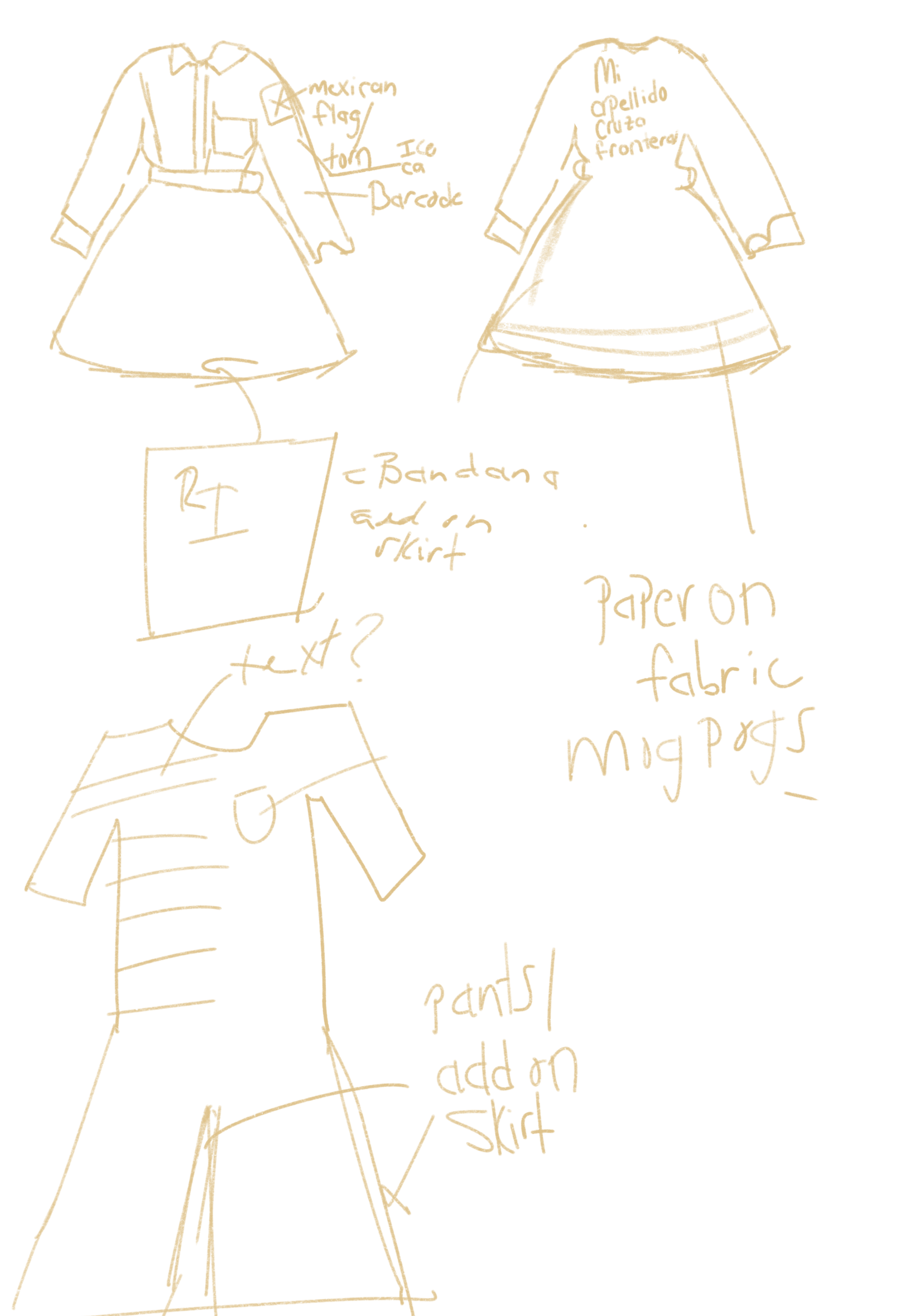
Sketch/Ideations
The United States has a long history of mass deportation targeting Mexicans and Mexican Americans. During the Great Depression, Mexican communities were scapegoated and displaced. According to Project Pulso, “In the 1920s and 1930s, the United States reportedly deported up to 2 million people of Mexican descent—nearly 60% of them were U.S. citizens.” In the 1950s, the U.S. government launched Operation Wetback, a large-scale deportation campaign that used aggressive tactics to remove thousands, often ignoring legal residency and fundamental human rights. These historical moments didn’t end in the past; they evolved. During his presidential campaign, Donald Trump promised to launch “the largest deportation program of criminals in the history of America” (García & Serrano, 2025). This rhetoric has only further fueled fear, broken families, and disrupted communities, especially those with mixed-status households.
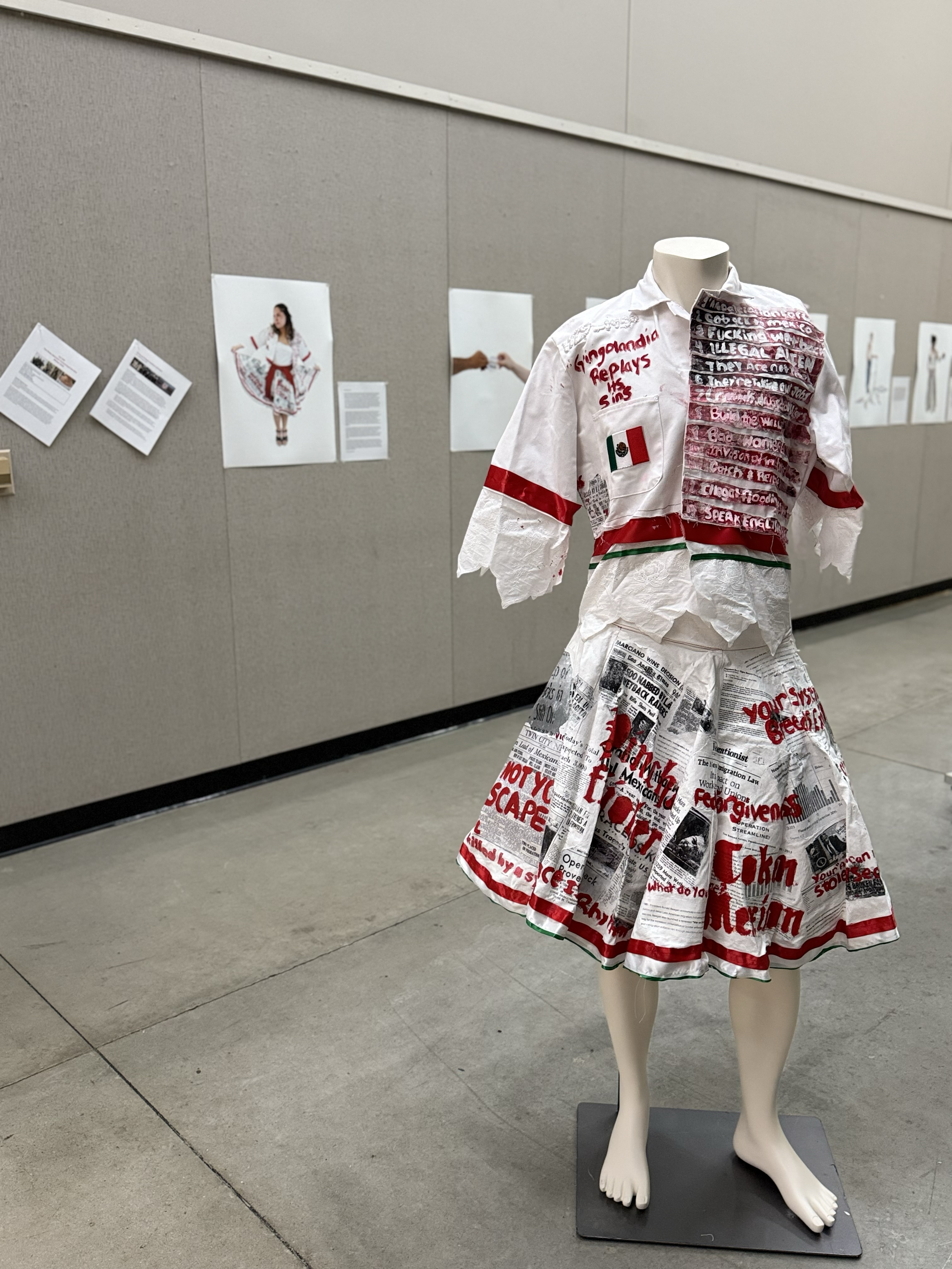
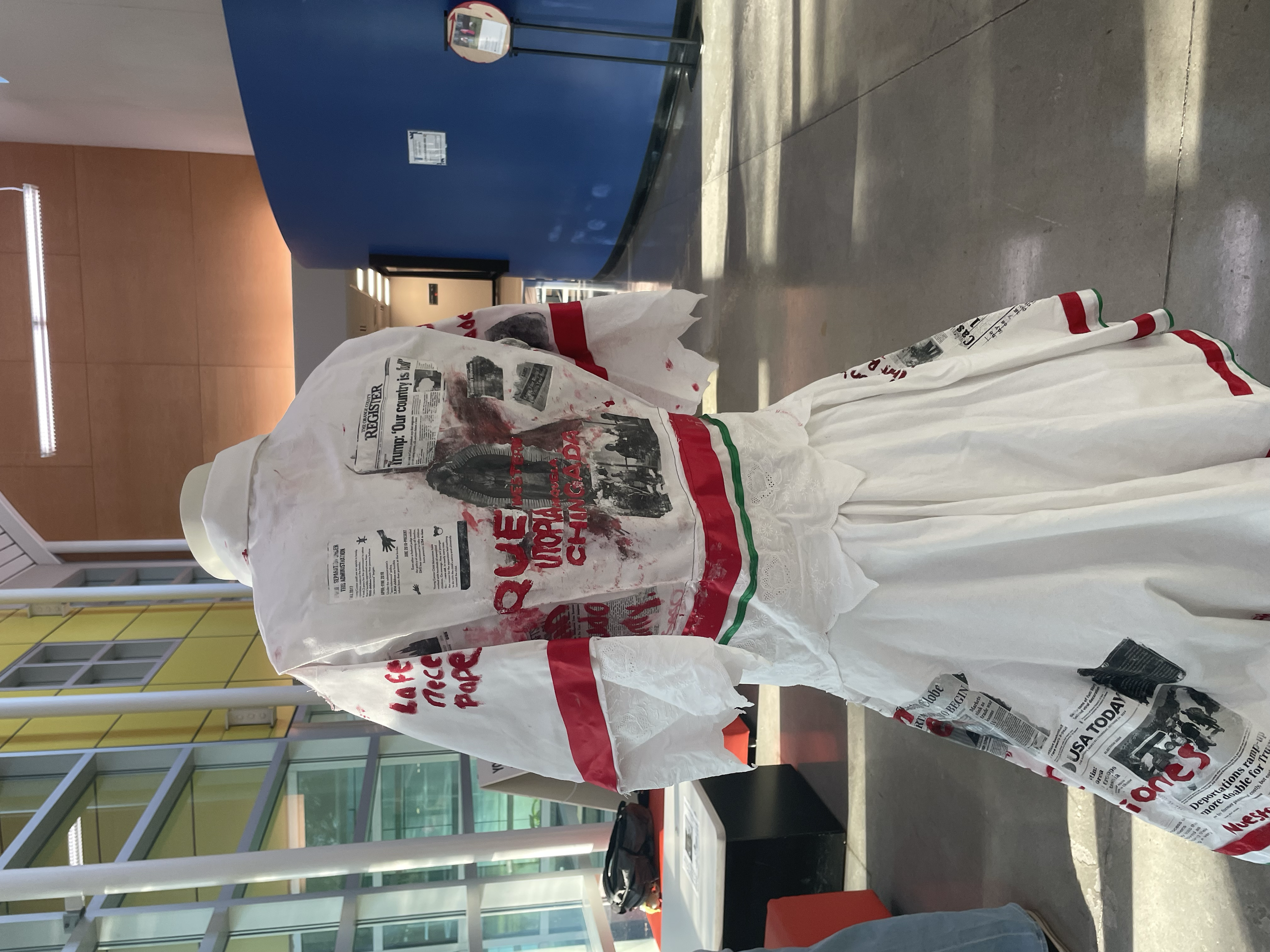
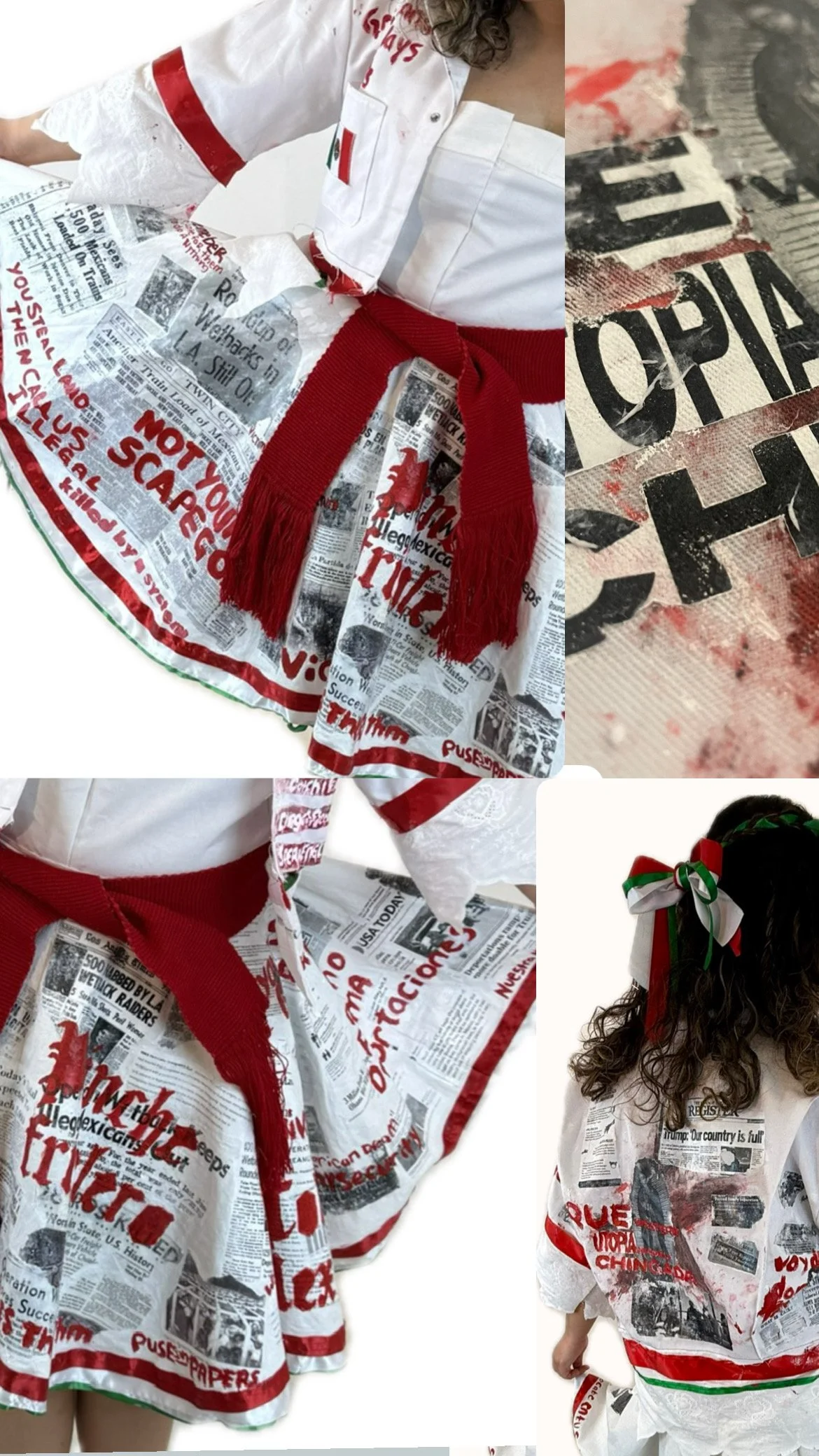
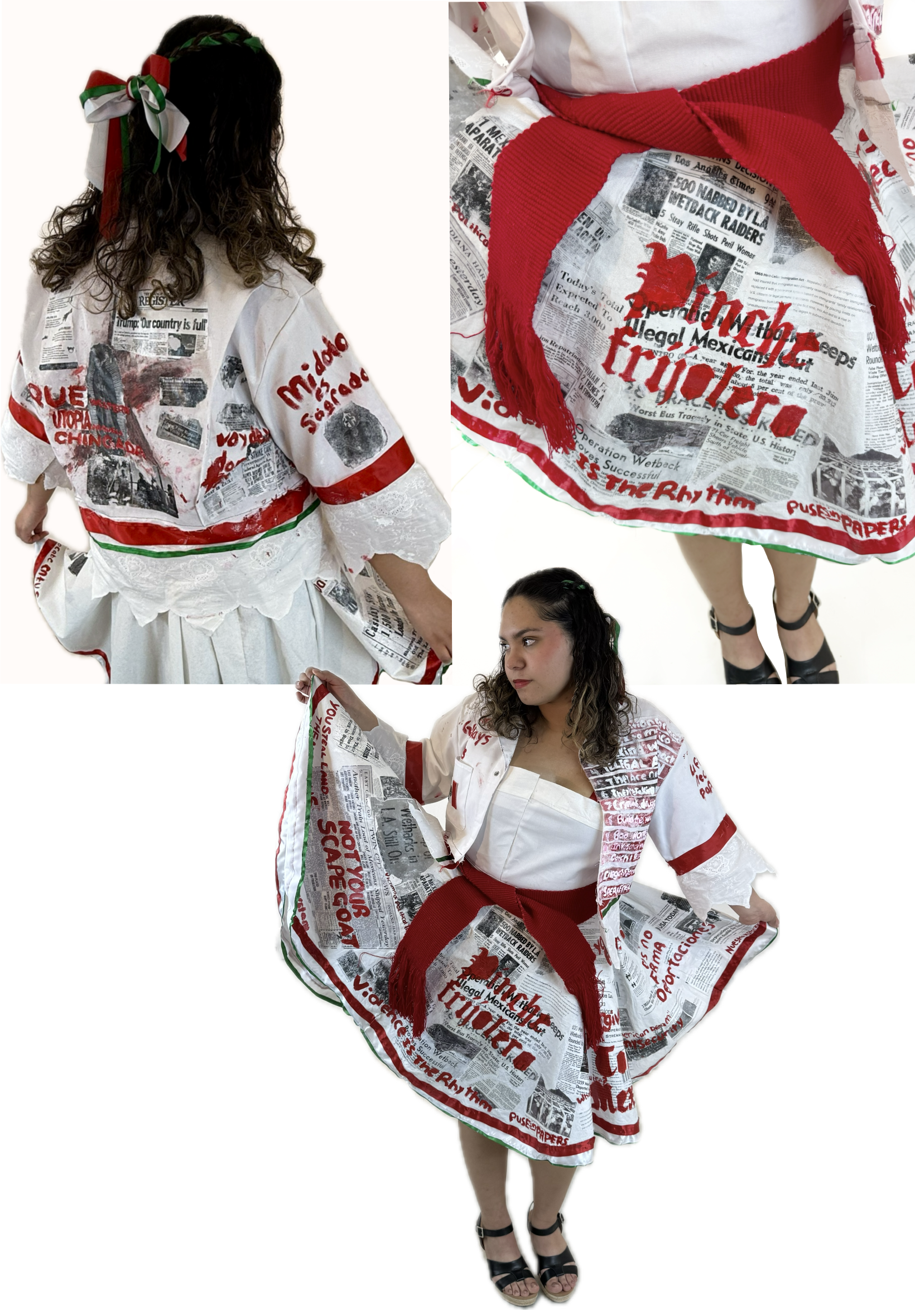
In my protest piece, I transformed a mechanic’s uniform into a traje inspired by Mexican folklórico dresses. This transformation symbolizes both the labor of survival and the cultural pride that endures despite systemic oppression. The dress’s skirt displays a visual timeline, featuring headlines and articles from the 1930s to the present day, as well as images taken during those times, highlighting deportation efforts. It highlights key moments such as the Mexican Repatriation, Operation Wetback, and modern-day deportation efforts under the Trump administration. Woven among these are phrases like “victims of political violence,” “they don’t want to remember, too late for them to do anything,” and "violence is the rhythm," calling out the government's historic and ongoing negligence.
On the jacket, I reimagined the 13 stripes of the American flag. Some carry direct quotes from Donald Trump like “bad hombres” and “criminals, drug dealers, and rapists” others are filled with anti-immigrant comments I’ve personally heard in media or been told directly. On the back of the jacket, “¿Qué western utopía? ¡Ni de la chingada!” is a rejection of the American Dream. With La Virgen de Guadalupe, a symbol of protection and strength, and on each shoulder rest the Sagrado Corazón and El Santo Niño de Atocha, protector of the vulnerable and the exiled, and those who came not by choice but out of survival.
While the history of deportation and exclusion in the United States has impacted many communities, such as Chinese and Japanese immigrants, before the Mexican Repatriation Act, this piece centers explicitly on the Mexican experience. It reflects my heritage, history, and the fears I have lived through as a first-generation Mexican American. I recognize the interconnectedness of these struggles, but this work speaks from a deeply personal place and aims to highlight the unique legacy of mass deportation faced by Mexican and Mexican American communities.
Artist Statement
Exhibition
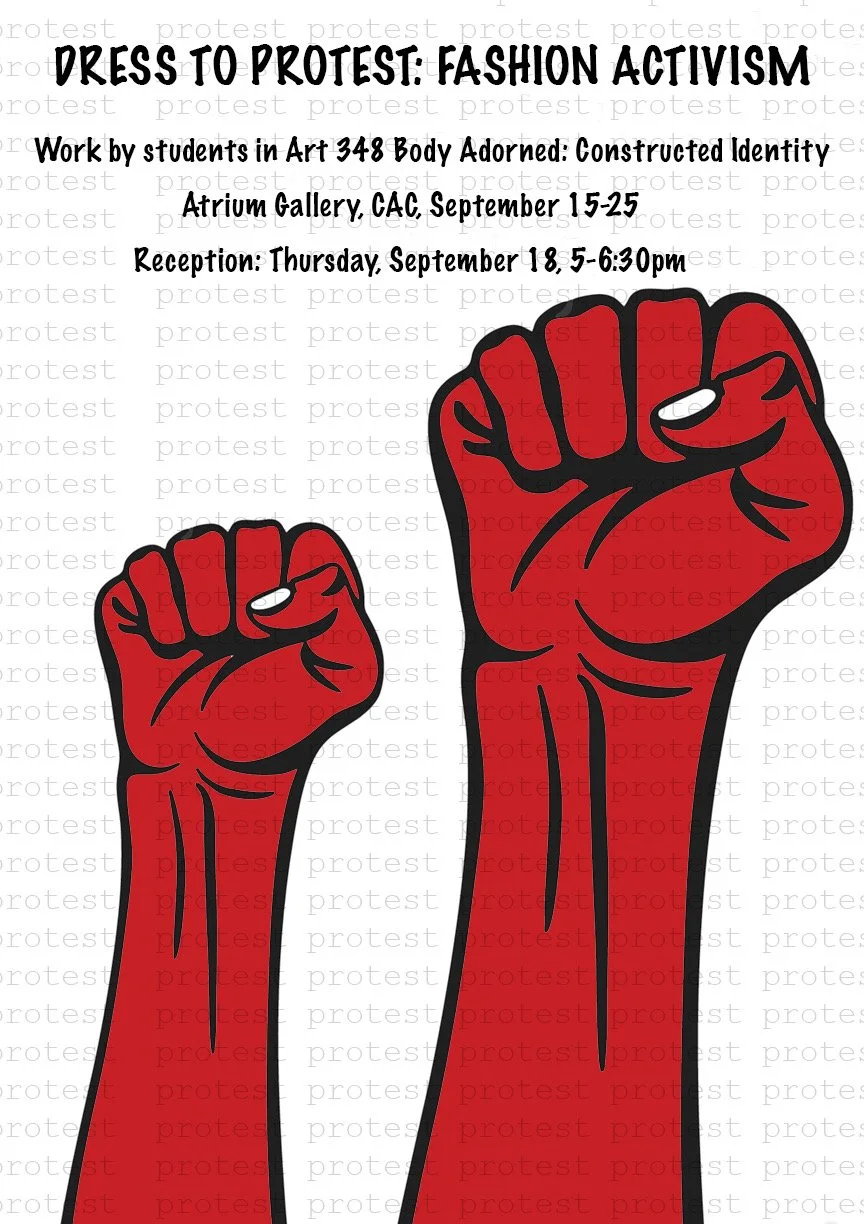
Dress to Protest: Fashion Activism
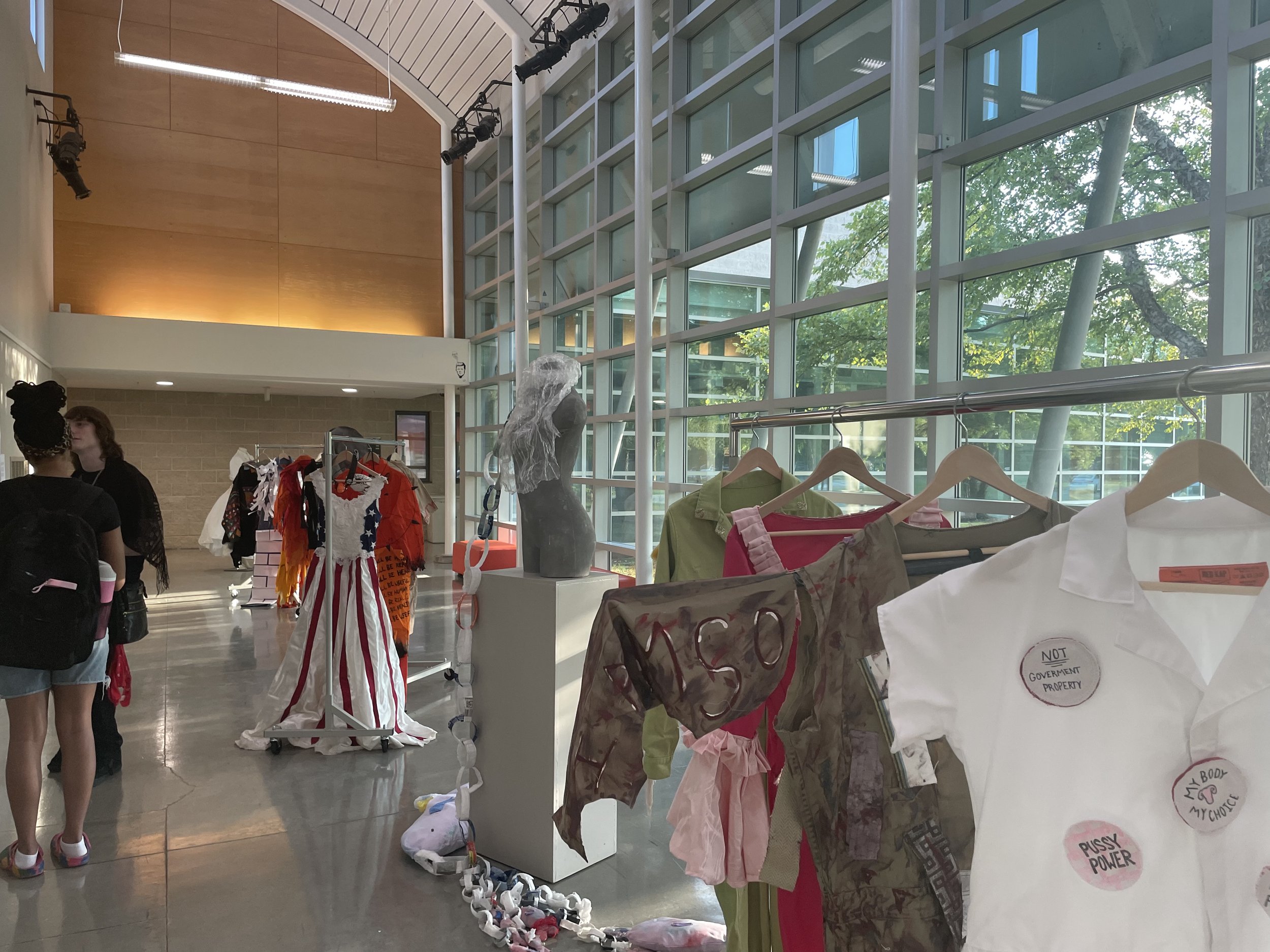
Group Exhibition at Grand Valley State University in part of Art 348 Body Adorned